Wetsuit selection guide
A wetsuit is not mandatory equipment, but in Finnish conditions it is an important addition for an open water swimmer. A wetsuit warms and floats the swimmer and its use extends the swimming season when the weather is still cool. Wetsuits are mainly made of neoprene and the idea is that a thin layer of water gets inside the suit, which warms up from body heat and thus keeps the swimmer warm. The suit must fit well and snugly on all sides, but the arms should move well. The fit is required especially at the wrists and neck so that too much water does not get inside.
In our selection you will find high-quality Orcan, Zone3 and Arena wetsuits for both professionals and beginners. This guide has been created to make it easier to choose the right suit. The choice is influenced by the swimmer's primary wishes for features. When you know what you want from a suit, choosing a suit becomes much easier.

Orca wetsuits
Orca's wetsuit selection includes wetsuits for triathlon and open water swimming, as well as for surfing and freediving. This guide describes in more detail the suits we recommend for triathlon and open water swimming. Models are available for beginners, enthusiasts, and competitive swimmers alike. The biggest differences in wetsuits designed for various levels of swimmers are found in the suits' buoyancy and flexibility.

Vitalis Openwater Hi-Vis
The Vitalis Openwater Hi-Vis is designed specifically for safe swimming and training in open water with maximum visibility. Maximum visibility is achieved through the suit's orange panels, which stand out in open water. The suit also provides the thermal comfort needed to maintain an ideal body temperature without compromising movement. This model is an updated version of Orca's Openwater Core Hi-Vis wetsuit.
Who is it for?
Due to its features, this model is suitable for both beginners and more experienced enthusiasts. The 2-2.5 mm thick neoprene offers neutral buoyancy in addition to good thermal comfort. For extreme safety, the suit is designed with a highly visible orange color, making it easy for boats and other swimmers to locate the swimmer in open water.

Vitalis TRN
The Vitalis TRN is the perfect wetsuit for swimmers who are new to triathlon or need a suit for daily triathlon training. The suit's high shoulder flexibility makes initial open water training very comfortable, and its neutral buoyancy helps maintain a good swimming position.
The Vitalis TRN is made from highly flexible materials that provide greater elasticity in all swimming phases. In the upper body and leg areas, 3 mm thick neoprene offers comfort in low temperatures and neutral buoyancy. In other parts of the wetsuit, the neoprene is 2 mm thick.
For whom?
The Vitalis TRN wetsuit is suitable for swimmers who are new to triathlon or need a suit for daily triathlon training. The suit is a suitable combination of flexibility and buoyancy for active swimmers.

Athlex & Apex Flow
The Flow series of wetsuits combine upper body flexibility and leg buoyancy. These features allow the swimmer to correct their position in the water and help achieve a more hydrodynamic posture. Buyers of the Flow suit need both buoyancy and flexibility from a wetsuit; by combining these, the right suit for the swimmer's needs is created.
Orca's Athlex and Apex wetsuits differ in terms of performance level and intended use. Apex models are designed for experienced swimmers who want to choose the best wetsuit on the market. Apex wetsuits use thinner, highly flexible premium materials and advanced buoyancy technology to support fast and natural movement while swimming.
Athlex, on the other hand, is aimed at triathletes and enthusiasts who seek a balance between performance, comfort, and price. The collection's design emphasizes durable materials and stable buoyancy panels that help maintain a good swimming position and support technique development.
Who is it for?
Flow series wetsuits are ideal for swimmers who are looking for both buoyancy and flexibility from a suit but do not need as much buoyancy as the Float series suits offer.

Athlex & Apex Flex
The Flex series wetsuits are specially designed for swimmers whose swimming posture remains stable in open water without major technical challenges, even during breathing. Flex series wetsuits are made for swimmers who need exceptional flexibility. The wetsuit's buoyancy is minimal, and it is specially designed for triathletes and open water swimmers who naturally have the correct swimming posture in the water.
Orca's Athlex and Apex wetsuits differ in terms of performance level and intended use. Apex model suits are designed for experienced swimmers who want to choose the best wetsuit on the market. Apex model wetsuits use thinner, highly flexible premium materials and advanced buoyancy technology to support fast and natural movement while swimming.
Athlex, on the other hand, is aimed at triathletes and hobbyists who seek a balance between performance, comfort, and price. The collection's design emphasizes durable materials and stable buoyancy panels that help maintain a good swimming posture and support technique development.
Who is it for?
Athlex Flex is suitable for experienced swimmers who do not need significant buoyancy from a wetsuit but desire maximum flexibility and low buoyancy.
Arena wetsuits
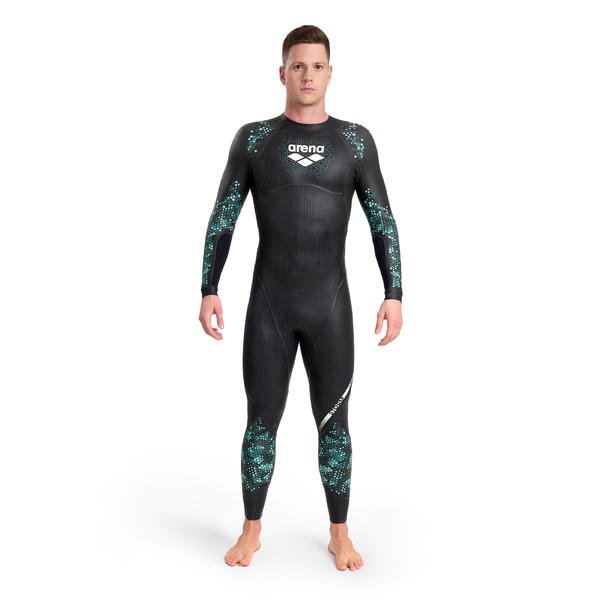
At the arena, you'll find Thunder and Storm wetsuits. The Thunder suit is designed for the needs of beginner open water swimmers and triathletes, with an emphasis on achieving and maintaining a proper swimming posture through buoyancy. The Storm, on the other hand, serves more experienced swimmers, offering greater flexibility and a freer range of motion.

Arena Thunder
The Arena Thunder wetsuit is the right choice for you if you haven't yet gained much experience in swimming or open water swimming. You especially need buoyancy from a wetsuit to correct your swimming posture and prevent your legs from sinking.
This wetsuit is designed specifically for the needs of beginner open water swimmers and triathletes. For a beginner open water swimmer, buoyancy is especially important, as it helps to improve swimming posture and technique. Flexibility in wetsuits is also very important, but with buoyancy improving swimming posture, a beginner can shave the most minutes off their performance. As swimming technique develops, however, swimmers usually start to appreciate freer arm movement. This is why the Arena Thunder wetsuit also features reasonably good flexibility in the arms and shoulders with 2mm neoprene. This means you can continue to use your wetsuit as your swimming technique develops.
Wetsuit details:
- Thicker neoprene (4mm) in the torso stabilizes your swimming posture.
- Thickened neoprene (3mm) in the legs and upper chest provides warmth and helps maintain your swimming posture by bringing your legs closer to the surface.
- Thinner neoprene (2mm) in the arms and shoulders allows for full arm strokes and reduces drag during strokes.
- FINA approved. Arena wetsuits comply with the standards of all world-renowned federations: FINA, World Triathlon (ITU), Ironman, USAT, and all other local federations that follow the rules of World Triathlon and FINA. So you can choose an Arena wetsuit for competitions under these federations as well.
Who is it for?
The Arena Thunder is suitable for swimmers who are looking for a wetsuit that provides excellent buoyancy to improve swimming posture and body stability.

Arena Storm
The Arena Storm wetsuit is the right choice for you if your swimming technique is already at a reasonably good level and you need maximum flexibility in addition to buoyancy.
We recommend the Arena Storm wetsuit for more experienced open water swimmers and triathletes. The suit combines maximum flexibility in the upper body and maximum buoyancy in the lower body. More experienced open water swimmers appreciate, in addition to buoyancy, a freer range of motion in arm strokes, made possible by thinner neoprene. The Arena Storm wetsuit uses Airlock-laminated neoprene in the torso, thighs, and buttocks to ensure good swimming posture and prevent the legs from sinking. Airlock laminate has air laminated between neoprene using mesh fabrics, which increases the suit's buoyancy. Only 1.5mm thick Yamamoto neoprene has been used in the arms and shoulders to ensure the freest possible range of motion during arm strokes. In the forearm, thin (2mm) double-laminated neoprene also improves water feel during the stroke and reduces the buoyancy of the arms.
Suit details:
- Thin neoprene (1.5mm) on the arms and shoulders helps maintain good mobility and clean range of motion.
- 4mm neoprene combined with Airlock and Arena Carbon Fiber compression technology helps maintain good swimming posture even when fatigued.
- Thin and flexible neoprene (1.5mm) at the cuffs and ankles makes dressing and undressing easier.
- FINA approved. Arena wetsuits comply with the standards of all world-renowned federations: FINA, World Triathlon (ITU), Ironman, USAT, and all other local federations that follow the rules of World Triathlon and FINA. Thus, you can also choose an Arena wetsuit for competitions under these federations.
For whom?
The Arena Storm is suitable for swimmers who are looking for a wetsuit that offers excellent flexibility, ensuring a natural-feeling arm stroke even in open water, and maximum lower body buoyancy to prevent the legs from sinking and ensure good swimming posture.
Compare the most popular wetsuits

|

|

|

|
|
|
|
2 mm - 2.5 mm |
2 mm - 3 mm |
2 mm - 3 mm |
2 mm - 4 mm |
1.5 mm - 4 mm |
|
|
Excellent |
Excellent |
Excellent |
Dear |
Excellent |
|
|
Yamamoto #38 |
Yamamoto #38 |
Yamamoto #38 & #39 |
Yamamoto #38 |
Yamamoto #39 & #40 |
|
|
Neutral |
Neutral |
Dear |
Excellent |
Dear |
|
|
€229.00 |
€299.00 |
€399.00 |
395.00 € |
€595.00 |
|
|
For the Beginner Open Water Swimmer |
For beginner and active open water swimmers |
For competitive swimmers and technically skilled swimmers |
For the beginner swimmer or triathlete |
For competitive swimmers and technically skilled swimmers |
What else do you need to bring with you on the open water?
Swimming goggles
Swimming goggles
Goggles with wide lenses are often best suited for open water. A wide lens distributes the pressure exerted by the goggles over a larger area, which reduces the pressure build-up and often feels more comfortable on the face. A wider lens is often more comfortable to wear for longer periods of time. This feature is useful in open water, as it is often difficult to adjust the position of the goggles in the water.
Swimming goggles recommended for open water often also feature anti-fog treatment and mirrored lenses. Anti-fog treatment ensures a fog-free and clear field of vision, and mirrored lenses make swimming in clear weather much easier.
Our recommendation for open water swimming is the AquaX open water swimming goggles. This model is designed for both open water swimming and the pool, offering excellent visibility and comfort for swimmers of all levels. The stylish design of the swimming goggles and the soft silicone padding ensure the most pleasant and comfortable swimming experience. The glasses have a mirror finish and Antifog and UV protection.
Discover AquaX swimming goggles!
Safety buoy
Safety buoy
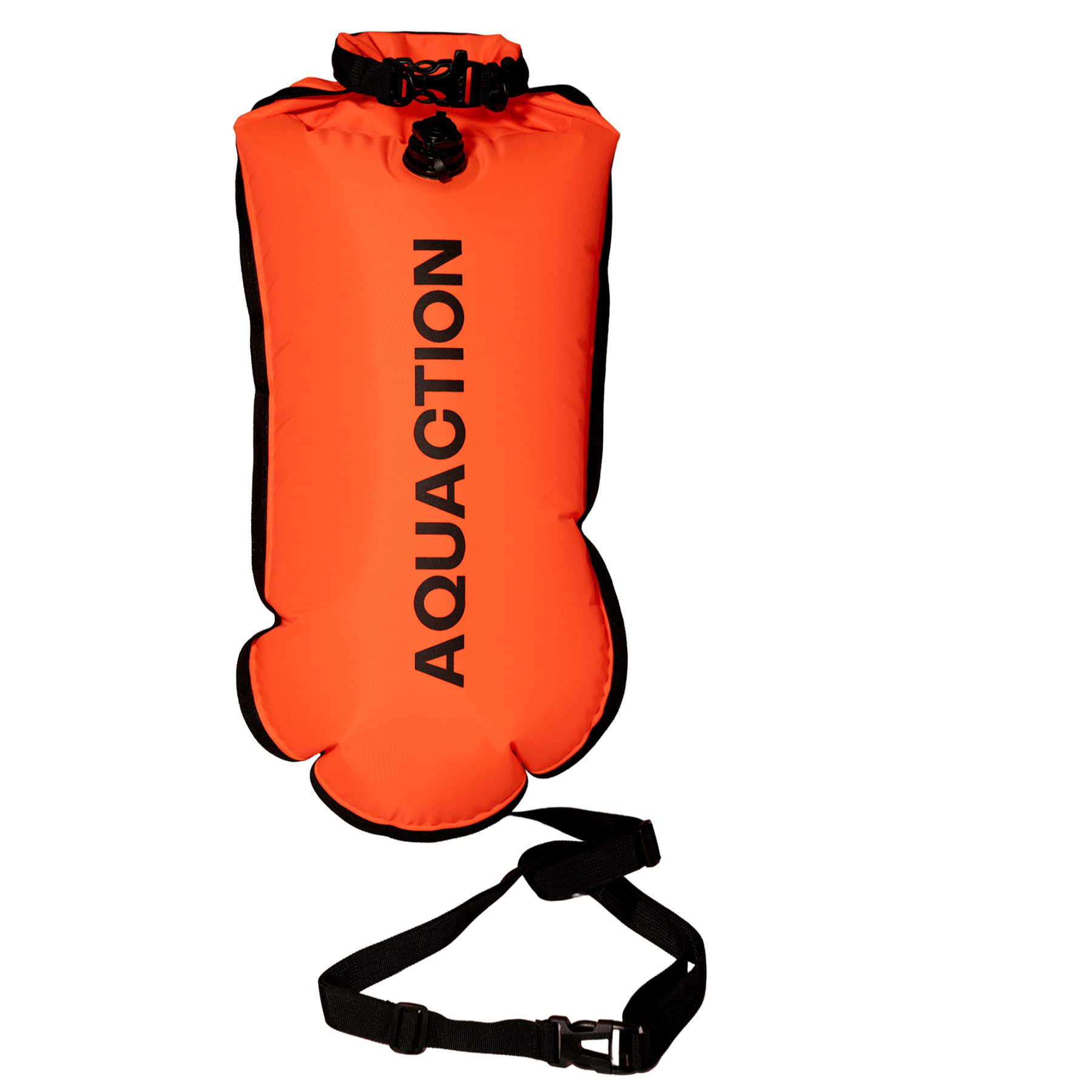
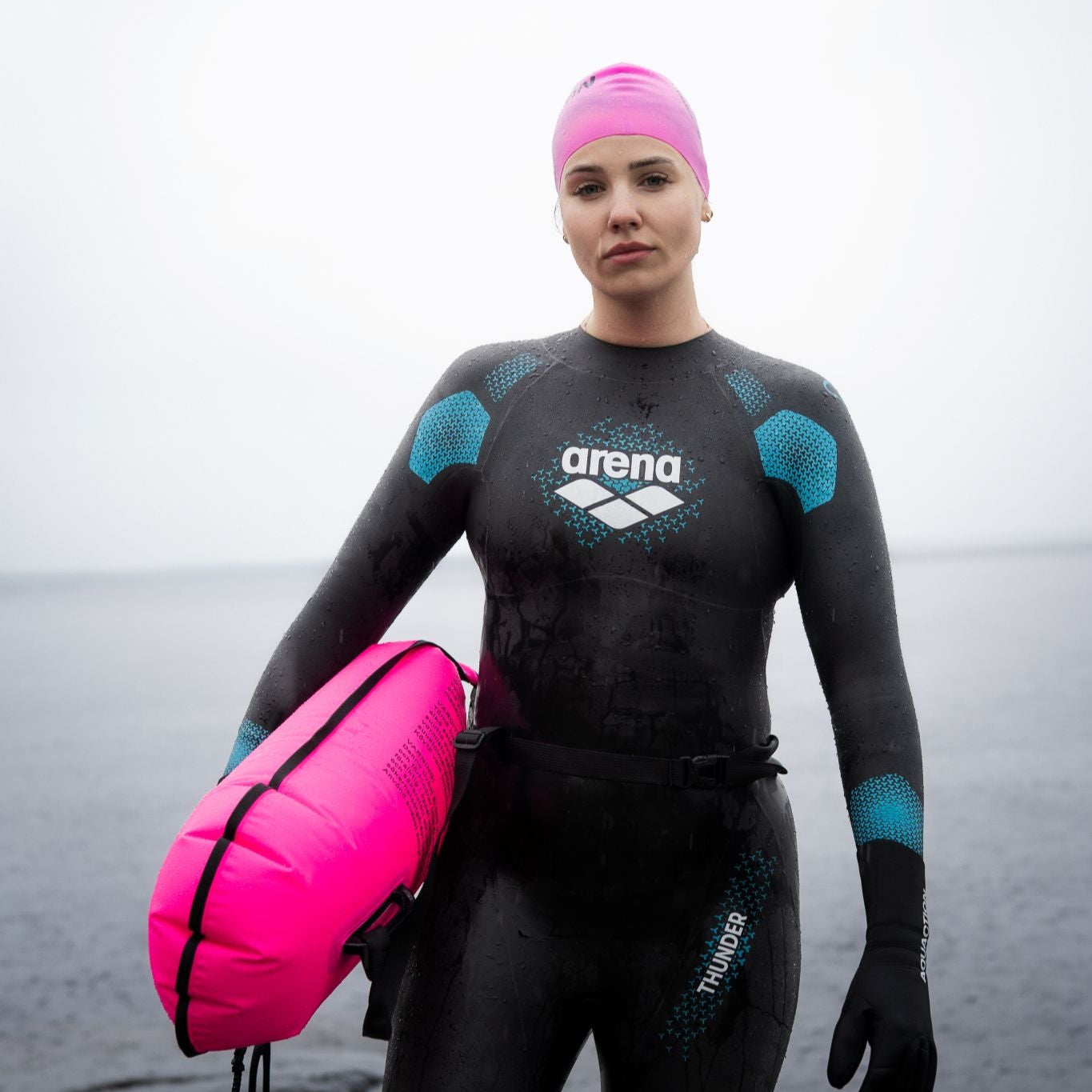
An inflatable safety buoy provides open water swimmers with increased visibility and safety in open water. Many buoys have a waterproof inner pocket, which is suitable for safely carrying small items such as car keys while swimming. You can take the buoy with you on a swimming trip empty and fill it only at the beach. When empty, it fits into a small space.
The safety buoy is attached to the swimmer's waist with an adjustable belt, allowing it to float on the swimmer's back without interfering with swimming movements. The brightly colored buoy makes the swimmer more visible to other water users, such as boaters. The buoy can be used as a float for resting if necessary, if you need extra support in the water for a while.
Bathing cap
Bathing cap
When swimming in open water, it is a good idea to choose a swimming cap in a bright color, as it will also be visible to other swimmers, thus increasing your safety. If the water is cold, you can try wearing two caps on top of each other. During the high season, you will also find neoprene swimming caps in our selection.
Frequently Asked Questions About Wetsuits
How do I know what size is right for me?
How do I know what size is right for me?
On each wetsuit product page, you'll find a size chart to help you choose the right size. When selecting an Orca wetsuit, special attention should be paid to the swimmer's weight. If the swimmer falls between sizes, we recommend choosing the size that better matches their weight class. Due to the materials, the fit of the suits varies slightly between different models.
If choosing a size presents challenges, you can always contact our customer service. You can also try on the right size at our store in Tampere. Wetsuits are available in limited quantities at our store, so we recommend checking availability in advance by contacting our customer service!
Should a wetsuit be tight?
Should a wetsuit be tight?
When trying on a wetsuit, it should be snug, especially around the wrists, ankles, and neck, to prevent too much water from entering the suit at these points. The suit should not be so tight that it restricts your range of motion and compresses your body. You can test this when trying it on, for example, by lifting your legs and rotating your arms.
In addition, the wetsuit's back zipper must be able to be closed.
How thick should a wetsuit be?
How thick should a wetsuit be?
Wetsuit thickness depends on the water temperature and the swimmer's personal experience of cold. If the water still feels cold despite the wetsuit, in addition to the suit, you can use neoprene socks and gloves, which warm the toes, ankles, fingers, and wrists. It's also worth considering using a neoprene swim cap or a hood.
If your goal is to compete in a triathlon, it's good to note that in a triathlon, the wetsuit thickness can be a maximum of 5mm.
Effect of water temperature on wetsuit thickness
Water temperature 4°C - 10°C - wetsuit thickness 6-7 mm
Water temperature 10°C - 15°C - wetsuit thickness 3-5 mm
Water temperature 15°C - 20°C - wetsuit thickness 2-3 mm
Water temperature over 20°C - wetsuit thickness 1-2 mm or a shorty suit
Which wetsuit is suitable for open water?
Which wetsuit is suitable for open water?
Most of the wetsuits in our selection are well-suited for open water swimming. A wetsuit suitable for open water is made of neoprene, which warms and floats the swimmer, helping to maintain a good swimming posture. Typically, wetsuits designed for open water swimming are 2-5 mm thick, providing suitable buoyancy for maintaining swimming posture.
Wetsuits designed for triathlon use
- Orca Athlex & Apex Float
- Orca Athlex & Apex Flow
- Orca Athlex & Apex Flex
- Arena Storm & Thunder
Wetsuits generally designed for open water swimming
- Orca Zeal Thermal, Hi Vis, Squad & Perform
- Orca Vitalis Thermal, Breast Stroke, TRN & Hi Vis
- Orca Vitalis Light, Shorty, Squad Hi Vis & Squad Shorty
Wetsuits designed for freediving
- Orca Zen
- Orca Mantra
Wetsuits designed for surfing
- Orca Tango 4:3 & 3:2
What do you wear under a wetsuit?
What do you wear under a wetsuit?
Typically, a swimsuit or a triathlon suit is worn under a wetsuit. It's best to wear as little as possible under the wetsuit so that the suit fits as snugly as possible and insulates effectively.
For cold waters, you can wear an additional layer under the wetsuit, such as Orca's heating neoprene vest or a thin neoprene shirt.
Is a wetsuit necessary to start open water swimming?
Is a wetsuit necessary to start open water swimming?
You don't necessarily need to buy your own wetsuit immediately to start open water swimming, but it is a recommended piece of equipment that makes the hobby more enjoyable and safer. For a beginner, a wetsuit is especially necessary if the water is cold or if you swim longer distances. A wetsuit keeps you warm in cold waters, and for long distances, it helps maintain your swimming posture by providing buoyancy in the right places.
However, the most important piece of equipment for starting open water swimming is a safety buoy, which makes the swimmer visible to others in the water. The buoy's bright color makes it visible from afar and also offers a resting place if needed.
How should a wetsuit be cared for and stored?
How should a wetsuit be cared for and stored?
Wash your suit correctly and clean it after every swim
The easiest way is to shower with the wetsuit on immediately after use. Rinse the inside of the suit after you take it off. If a shower is not available, you can use a garden hose or immerse the suit in a bathtub, turn it inside out, and immerse it again. Do not use laundry detergent! We recommend using a wetsuit cleaner every five washes or if the suit smells musty.
Do not wash your suit in a washing machine
Also, do not dry the suit with hot air (e.g., a hairdryer) or in direct sunlight.
Dry your suit correctly
Turn the suit inside out and let it dry from the inside first. This is especially important if you plan to use the suit again the next day. The suit is significantly easier to put on when the inside is dry.
Store your suit in a dry place
Do not store the suit on a hanger for long periods or leave it in, for example, a car for storage.
Do not tear the suit when in a hurry to put it on
Take off jewelry and rings; long nails can also easily tear the suit. If putting on the suit feels difficult, you can use thin cotton gloves (each Orca suit comes with one pair of gloves). If possible, ask a friend to zip up the suit. If you zip it yourself, remember to pull your shoulders together and keep your arms raised when pulling the zipper cord up.
Warm up before putting on the wetsuit
The suit is not designed for exercising on dry land, so its seams will stretch over time if continuously stretched.
Repair cracks and cuts
It is very common for neoprene to develop cuts over time if the suit hits rocks or other sharp corners, for example. Small abrasions and holes are easy to repair at home with a suitable wetsuit glue. If holes are not repaired, they can easily tear into larger ones. You can get more detailed information on suit repair from our customer service.
What is the difference between wetsuit materials?
What is the difference between wetsuit materials?
Wetsuits are primarily made from neoprene, which is a durable and flexible material. The waterproof material retains heat well.
Wetsuits often use various types of Yamamoto neoprene, which differ in terms of their strength and elasticity. Orca's Yamamoto neoprenes, starting from the most elastic:
- Yamamoto #44
- Yamamoto #40
- Yamamoto #39
- Yamamoto #38